
Chitwan National Park Guide
Plan a visit around forest trails, rivers, wildlife and nearby communities.
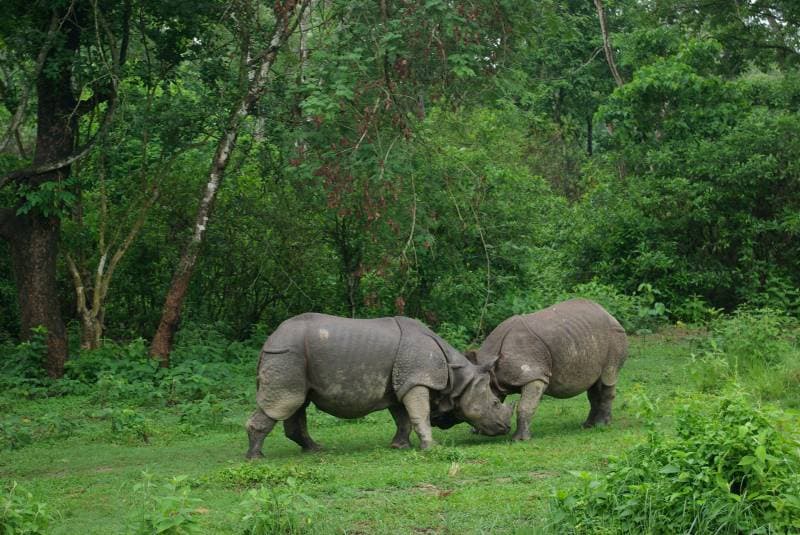
Chitwan National Park
Chitwan National Park was declared a UNESCO Natural Heritage Site in 1984. The park lies in south-central Nepal and covers 952.63 sq.km of deciduous forest overlooking the floodplains of the Narayani, Rapti and Reu rivers. The park headquarters at Kasara is a 21 km drive from Bharatpur, which is 20 minutes by air or 146 km by road from Kathmandu. There are plenty of resorts, hotels and lodges in the park to stay in.
This famous park offers a wilderness with a rich ecosystem of mammals, birds, reptiles and water animals of several kinds. Its highlights are the 500 Asian one-horned rhinoceros and some hundred nocturnal Royal Bengal tigers that live in the park’s dense forests. You’ll discover a lost world of towering trees and twisting vines, of prehistoric rhino and lumbering elephants, crocodile, python and deer, brilliantly coloured birds and, if you’re fortunate, the superb Royal Bengal Tiger. Sharing their home are other animals such as the rhesus monkey, grey langur, deer, leopards and wild cats. Another important part of the Chitwan experience is the colourful Tharu culture: their way of living, their traditions and the heart-touching Tharu Dance. While you’re here, you can try plenty of activities, such as jungle safari on elephant back, jungle walks, canoe rides and jeep drives.
Features
The park has a wide diversity of ecosystems, including the Churia hills, ox-bow lakes and the floodplains of the Rapti, Reu and Narayani Rivers. The Churia hills rise gently towards the east from 150 m to more than 800 m. The western part of the park is made up of the lower but more rugged Someshwor hill. The park shares its eastern boundary with the Parsa Wildlife Reserve.
Climate
The park has a range of climatic seasons, and each one offers a different experience. From October through February, average temperatures of 25°C make for a pleasant climate. From March to June, temperatures can climb as high as 43°C. The hot, humid days then give way to the monsoon season, which usually lasts from late June until September. Rivers flood and roads become impassable.
In late January, local villagers are allowed to cut thatch grass for their own needs, which gives visitors a much better view of the wildlife. In September, November, February and April, migratory birds join the resident birds, creating spectacular bird watching opportunities. While the monsoon rains bring lush vegetation, most trees flower in late winter. The palash tree, known as the “flame of the forest”, and the silk cotton tree both have spectacular crimson flowers that you can see from a distance.
Flora & Fauna
The Chitwan valley is made up of tropical and subtropical forests. Sal forests cover 70 percent of the park, and sal leaves are used locally as plates at festivals and for religious offerings.
Grasslands cover 20 percent of the park, with more than 50 different types of grass, including elephant grass (Saccharum spp.), which is famous for its immense height: it can grow up to 8m tall. The park is home to more than 50 mammal species, over 525 birds, and 55 amphibians and reptiles. Endangered fauna found in the park include the One-horned rhinoceros, Gaur, Royal Bengal tiger, Wild elephant, Four-horned antelope, Pangolin, Golden monitor lizard, Python, Bengal florican, Lesser florican, Giant hornbill, Black stork, White stork and more.
Facilities
The display at the visitor centre in Sauraha has fascinating information on wildlife and the conservation programme. The women’s user groups’ souvenir shop sells a variety of handicrafts and other local products, ideal for gifts and souvenirs.
An elephant safari gives you the chance of a closer view of the endangered one-horned rhinoceros, and you may even glimpse the elusive Bengal tiger. The Elephant Breeding Center at Khorsor, Sauraha, has information on captive elephants and the calves born there.
The museum at Kasara, the park headquarters, has informative displays. Near the HQ you can also see Bikram Baba, a Hindu religious site of archival value. A short walk (1km) from the park HQ takes you to the Gharial Breeding Center, which is also home to the Marsh mugger and a number of turtles.
Inside the park, there are 7 resorts run by park concessionaires that can provide lodging and access to wildlife activities. Plenty of resorts and lodges outside the park also offer a range of services.
Explore several habitats
Chitwan’s forests, tall grasslands and river corridors each give you a different way to experience the landscape.
Build a balanced itinerary
Combine a guided wildlife outing with a river experience, bird watching or a cultural visit. Leave some space between activities for meals, transfers and a rest.
Prepare with your guide
Ask about the route, duration, clothing, footwear and any restrictions for each activity. Follow your guide’s instructions and watch animals from a sensible distance.