
Published
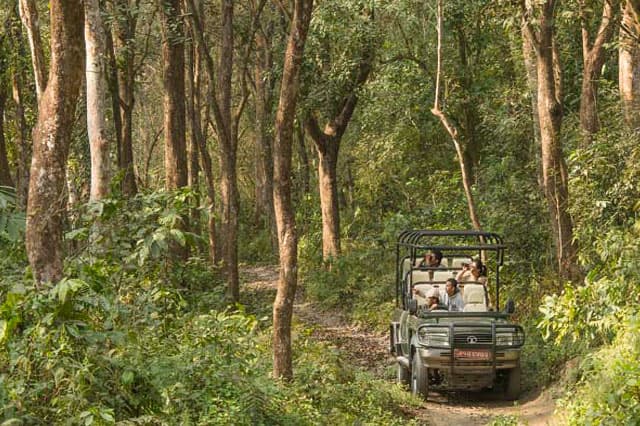
A jeep safari is the easiest way to cover a lot of Chitwan in one afternoon. You sit back, the driver does the hard work and your guide keeps an eye out for anything with fur, feathers or scales. Easy, yes. But a few small habits make a surprising difference to what you'll see.
Which trips include a jeep safari?
The jeep drive is part of our 3 nights / 4 days and 4 nights / 5 days packages, where it takes up the afternoon of day two, after the morning canoe ride and jungle walk. On the 1-day trip and the shorter stays, the afternoon or morning outing is a jeep safari or an elephant safari, depending on your booking and availability, so do tell us if you'd prefer the jeep. On request, it can also be arranged for a day of your choosing.
The route in brief
The drive takes you through grassland, riverside forest and sal forest towards Kasara, the national park headquarters, with a stop at the gharial breeding centre to see how the crocodiles are raised before they're released into the rivers. You'll find the full description on our jeep safari activity page, which is also where to book.
What to wear and bring
- Clothes in light, muted colours. Bright colours stand out in the forest. - A scarf or buff for the dust, especially in the dry months. - A hat and sunscreen. Afternoon sun in an open vehicle is no joke. - A warm layer from November to February, when the evening chill arrives quickly. - Binoculars if you have them, and a camera with a decent zoom.
How to spot more
When the jeep stops, keep your voices low and give the forest a minute to come back to life around you. Scan the edges of the grassland rather than the middle of the track, and watch for movement near the water. Your guide reads the signs (tracks, alarm calls, flattened grass), so if they point, look where they point and save the questions for a moment later.
Be patient (and realistic)
Some afternoons are full of rhinos, deer and monkeys; others are mostly birds and beautiful light. Both count as a good safari. Sightings depend on the season, the weather and luck, and no honest operator will promise you a tiger. If you'd like better chances, a longer stay simply gives you more outings.
When to go
Chitwan is at its most comfortable from October to May. Late January is a good time for visibility, because local villagers are allowed to cut the tall thatch grass then, which opens up the view. During the monsoon, usually from late June to September, rivers flood and some roads become impassable, so drives can be limited.
Ready to go? Book the jeep safari on its own, or choose the 3 nights / 4 days package to have it built in.